ADHD Planner for Work: A Design-Centric Approach to Productivity
For professionals navigating the creative landscape, managing complex projects with ADHD requires more than a standard to-do list; it demands a specialized tool that harmonizes visual processing with productivity. An effective ADHD Planner for Work acts as a critical creative asset, transforming scattered thoughts into structured, actionable workflows. This isn't just about organization; it's about designing a personal system that reduces cognitive load, enhances focus, and provides the visual clarity needed to excel in demanding fields like graphic design, marketing, and digital content creation.
The Visual Design of Effective ADHD Management
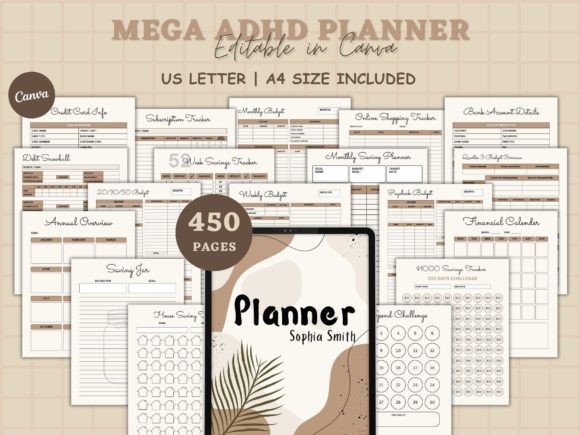
From a graphic design perspective, the structure of an ADHD planner is paramount. Its effectiveness hinges on principles of visual hierarchy, clean typography, and intuitive layout. A well-designed planner uses ample white space, logical grouping, and clear headings to guide the eye and prevent overwhelm. The choice of font impacts readability and focus, while a controlled color palette can be used to categorize tasks, highlight priorities, and create a calming aesthetic. This thoughtful design directly translates to improved user experience (UX) in personal planning, making the act of organization feel less like a chore and more like a seamless part of your design workflow.
Practical Applications Across Creative and Professional Projects
The utility of a customizable ADHD planner extends far beyond simple scheduling. Its structured templates can be adapted to support nearly every facet of a creative business or professional endeavor.
- Branding & Project Management: Use the financial planner section for tracking client invoices or the study schedule to map out a brand identity project timeline.
- Marketing & Social Media: The journal and task prioritization features are perfect for planning content calendars, brainstorming campaign ideas, and tracking engagement metrics.
- Design & Editorial Work: Sketch layout ideas, manage editorial deadlines, and organize research for web design, packaging design, or print projects in a centralized, editable document.
- Personal Branding & Presentations: Structure speaking notes, plan portfolio updates, or outline a professional presentation, ensuring a polished and coherent narrative.
Selecting and Customizing Your Creative Planning Asset
When choosing or customizing a planner, consider it a piece of your personal brand identity. The goal is to create a cohesive and functional tool that you’ll actually use.
- Evaluate for Editability: Prioritize assets in formats like Canva or PDF that allow full customization. You should be able to adjust text color, size, and font to match your preferences or existing brand guidelines.
- Assess Visual Hierarchy: Ensure the layout has a clear system for differentiating between daily tasks, weekly goals, and long-term projects. Look for prompts and sections that guide your thinking without restricting it.
- Ensure Scalability & Integration: The planner should be printable in standard sizes (A4, US Letter) for physical use and also function seamlessly as a digital document. Consider how its sections—like the self-care or travel planner—can integrate into your overall life management system.
Ultimately, investing in a thoughtfully designed ADHD planner is an investment in your creative and professional capacity. By externalizing executive functions onto a well-structured, visually intuitive platform, you free up mental energy for the work that matters most: innovation, problem-solving, and high-quality execution. A quality planning system is more than an organizational tool; it is a foundational element for sustainable success and well-being in the dynamic world of creative work.